
Marcie Curry: Expert Spotlight Throwback:
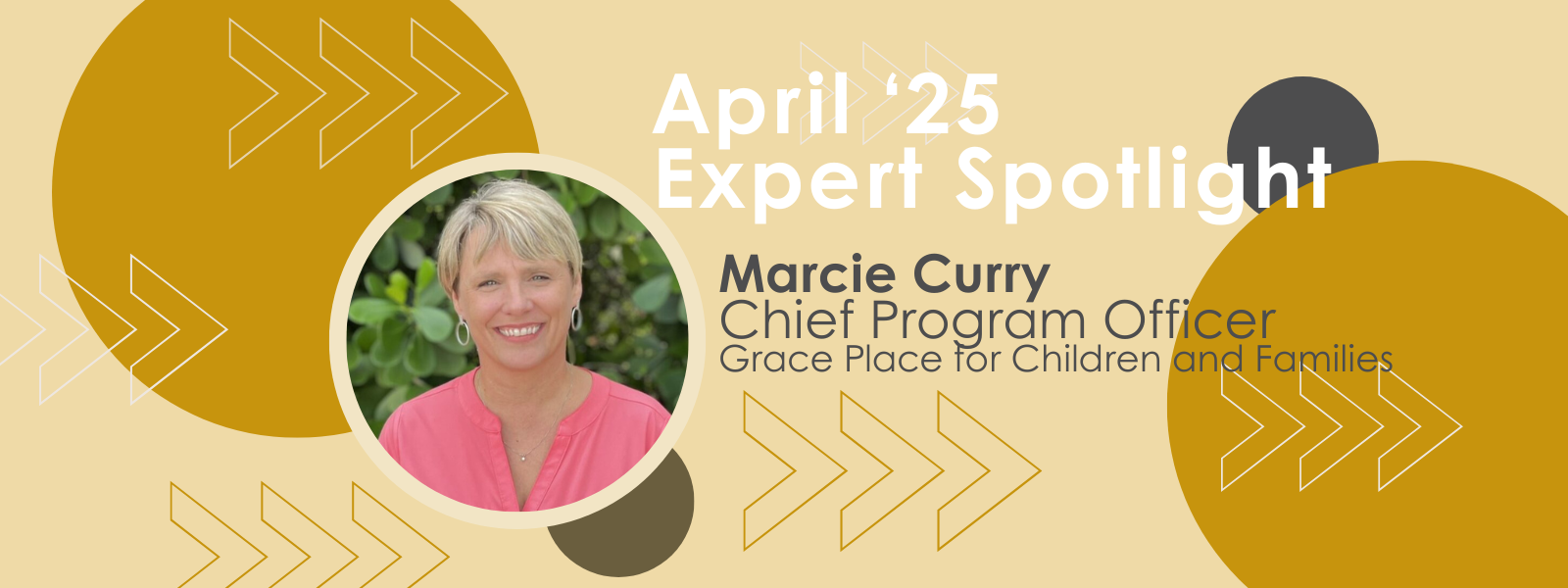
We had the pleasure of sitting down with Marcie Curry, the Chief Program Officer at Grace Place for Children and Families in Naples, Florida. Grace Place operates with the powerful mission of empowering families to build a more prosperous future through education. We explored her understanding of Experiential Learning as practical and real-world focused, emphasizing its vital role in preparing students for success beyond the classroom. Marcie also shares her thoughts on the necessity of a paradigm shift in educator training to better equip teachers to create these meaningful learning experiences for students. Drawing from her own experiences she highlights the importance of fostering an entrepreneurial spirit and focusing on the learning process. We are grateful to have Marcie as a member of our Learning Network and are excited to share her story and amplify the important work underway at Grace Place.
What does Experiential Learning (EL) mean to you, and why is it important? What would it look like to truly learn experientially? To me, Experiential Learning is practical learning that's going to help students succeed in the real world. Since our students are all living in a real world, navigating real problems, and creating their own pathways of success, their learning needs to support that. It's sad to reflect on my own and many others’ high-quality education, which was such a privilege to receive, but realize we can't hang a picture properly in our house, can’t fill out a W4 without knowing the tax implications, or have trouble calculating a discount while grocery shopping. This makes that education feel not very useful.
It's important because we all want to succeed in the world we live in and what good is education if it's not practical? I think that is where we’ve lost so many students along the way. I am not someone who wants to throw away formal education, or say we will never do testing, or sit in desks, but if academic content and standards don't connect to the world, we've got a problem. Right now, we risk kids leaving school without skills. It's sad, because the world is rapidly changing, and if we don't prepare students to think critically, solve problems, experience things, reflect and continue to learn, they won't be equipped to succeed. It boils down to connecting to the real world whenever possible. If it's not possible, rethink if it's worthwhile to teach.
What do you believe is the best first step towards advancing the future of learning? What is necessary to make it successful? I think the first step is a paradigm shift, and I think a lot of it starts with our educator training programs. Teacher education programs focus on standards and academic content which are very important, but they can lose sight of these real-world connections. An expansion of teacher education programs that focuses on a new paradigm would be an important start. Even the method of student teaching and the way we train our teachers is archaic in so many ways. The current process requires writing 13-page long lesson plans that aren’t very useful when you’re standing in front of a group of students. Thankfully the dreaded edTPA is getting phased out of most educator preparation programs.
There's this STEM magnet school on the west side of Chicago where I used to live and they had this project where middle school students would design and build a miniature golf course as a part of their curriculum. To me this is an ideal experiential approach. They're collaboratively working together, they're designing the course, they're doing some art along with it, they're having the community come and play the course. They're learning so many useful things. I imagine that kids walked away from that miniature golf project with a huge amount of pride, and I'm sure they remember it for the rest of their lives. I bet you they jumped out of bed in the morning thinking today I'm building hole six! I would have loved that kind of stuff in school. I grew up in a rural area of Illinois, and my dad got a hold of this incubator and I hatched a bunch of ducks, and I did a whole science project on it. I was obsessed with that project and I remember thinking this is the best thing I've ever done in school. A lot of teachers feel so overwhelmed by their endless responsibilities, imagining themselves creating a miniature golf course would probably paralyze them into a space of “I don't want to do this anymore.” That’s why there needs to be a paradigm shift. From my experience, successful teachers struggle when they are all of a sudden asked to pivot and do this or that when it was not how they were trained to teach. Where I am currently employed at Grace Place for Children and Families in Naples, Florida, we are going to attempt the miniature golf design challenge during our summer program. It’s going to be amazing! But, I don’t want to underestimate the lift that this will be for the staff who might need a paradigm shift to fully see the benefit in doing a project of this size.
Who is the most influential mentor you have had throughout your life? What qualities did they impart that you continue to embody in your work? My most influential mentor was my boss for over 20 years. Her name is Dr. Arloa Sutter. She is the founder of Breakthrough Urban Ministries in Chicago. I really felt like when I would meet with her she was truly investing in my success. I would like to be like that for other people. Ask the right questions, and not be disappointed in people when they go a different path. Realizing that the joy and the learning is In the process, and being cool with the twists and turns of life.
Something that stands out to me is that she didn't expect everything to go right. She was very entrepreneurial. Her mindset was ‘you got an idea, you should try it, and if it doesn't work out, that's okay, because you're gonna learn a lot from that, and I bet it's gonna make you a better person.’ She really stretched me outside of this rigid, perfectionist expectation that I had for myself. She focused on the process, the joy and the journey.
She had a Zen approach to life, she was also very composed and humble. The way I saw her handling conflicts and seemingly disastrous situations that would come up was really inspirational. I was able to take that with me as I supervised more people and have had more leadership roles. She rarely projected her stress on others, and I've just gained so much from that. Before working with her I was very much of the mindset that there's one path, there's one way that things should go, and when they don't go that way, I'd be really disappointed and stressed. But she showed me that this approach could turn out better than ever imagined. She created a $15 million organization with this mindset. She just had that kind of talent, and I think she hired good people, trusted those people to do their jobs, and the organization that she started was wildly successful.
What drew you to your organization's mission? What drives you to activate this vision? Grace Place is a unique organization because we are a family literacy program, meaning we are educating the whole family. We do a lot of other stuff, but at the end of the day, we exist to make sure that we provide supplemental education services for families who need literacy support to succeed. Many of our families speak another language besides English at home, and they really have a great desire and motivation to learn English and be proficient so that they can use that to reach their goals. The families are so motivated to provide a better life for their children. The parents that we get to work with, it's just so inspiring, and I think that really draws me to our mission. I feel like the work we're doing is strengthening families and then, of course, that strengthens the whole community. So I love the family connection at Grace Place.
The 4-square mile community we serve in Naples, Florida, is packed with families and children, over 10,000 children under 18. There are five elementary schools, one middle school and one high school in this community. The people who come to Grace Place come because their neighbors and friends told them about it. Anytime we do a big recruitment push at the schools it’s not as effective as if someone in the neighborhood says they recommend us. When parents can have a good experience they can recruit for us, and they can get the word out. Grace Place is really quite a remarkable place, and it mostly has to do with our focus on the whole family.
If no obstacles stood in the way and you could design the future of education as you see fit, what would that look like for educators and students? If I had no obstacles standing in the way, I would like to expand Grace Place’s connection to local industries. My big initiative right now is with the middle school after-school program to strengthen career exploration especially with local employers. There's a professor named Dr. Neto,from a local university, FGCU, who did a research study about local, high-demand fields and the skill gaps that exist. From that, we know what industries are projected to grow and what skill gaps those industries are reporting. The gaps are both durable skills and job-specific skills. Ideally, we would develop a curriculum based on the feedback from these industry partners to address the skill gaps and get our middle school students excited about their futures. For example, one growing field in Southwest Florida is manufacturing. So, if we could design a program for middle schoolers to build some of those needed skills, they could potentially fill some of those future roles and make a really great salary.
The pushback I get is “Career Exploration at 12 years old? Do we really want to have our kids to start thinking about being the cog in the wheel of employment already?” I believe that perspective is thinking about employment all wrong. The research is showing that if students don't think about it now, they're just going to fall into whatever is available at the time. I've had the privilege of doing something that I love and that is really important to me, but I recognize that many people can’t say this. It's going to be even more important to this next generation. No longer are people going to just drag themselves to a job that they hate, and nor should they. I believe if you can get some real career exploration and some career mentoring in the middle school, kids can figure out what they're good at. Kids can find an employment pathway or even a hobby pathway that they have joy about and that they feel motivated by, and they can build wealth through it. If we can get that industry connection stronger in our middle school, I feel like the kids and the industry themselves will both benefit.