
Jessica Lander: Expert Spotlight Throwback
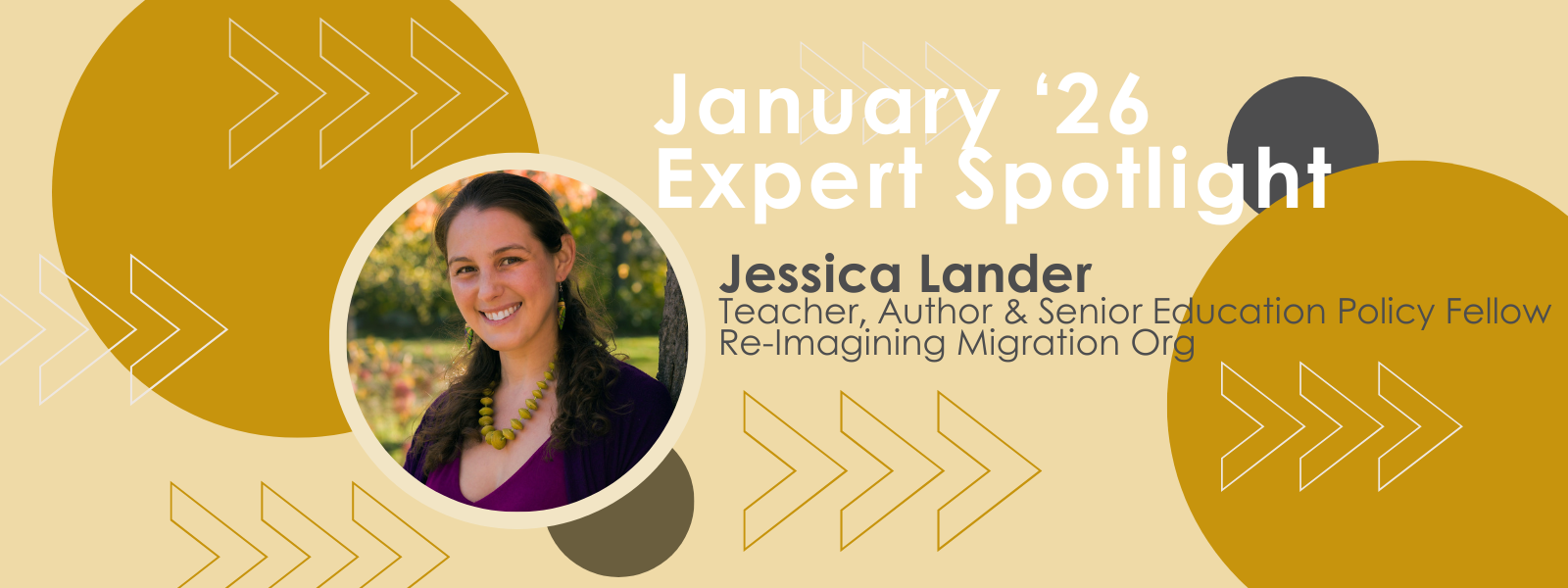
This month, we are full of profound gratitude as we turn our spotlight toward one of our own, Jessica Lander. At a time when the landscape of education is shifting rapidly, we find ourselves looking back at the alumni who have not only shaped who we are but have gone on to pave expansive, inclusive new paths for the next generation. Jessica’s journey from a Citizen Schools classroom to becoming a celebrated author, educator, and advocate is a testament to the enduring power of our community. We are incredibly honored to share her insights this month, as she reminds us that the seeds of leadership planted years ago can grow into a forest of systemic change.
Jessica’s work is a vibrant masterclass in innovation fueled by empathy. Through her dedication to immigrant-origin students and her tireless advocacy for Action Civics, she is redefining what it means to truly belong in an American classroom. Her recent book, Making Americans: Plyler v. Doe and Opening the School Door, and her successful efforts to codify educational rights in Massachusetts serve as a beacon of hope and a call to action for us all. We invite you to dive into this interview with the same enthusiasm she brings to her students every day—a spirit of bold inquiry, deep respect for history, and an unwavering belief that every student's voice has the power to transform their community.
What does Experiential Learning (EL) mean to you, and why is it important? What would it look like to truly learn experientially? I think that Experiential Learning can look like a whole range of different things. One type of Experiential Learning I found really impactful are Action Civics projects. It is really powerful when the work we do in classrooms has an impact in the community. I remember at Citizen Schools when we had our final showcases, there was a real importance of having an authentic audience to engage with our students' work.
I work with immigrant-origin students who come from more than 30 countries around the world. When students are asked to do work that is not simply for a grade I've seen them push themselves to grow in really impactful ways. I see this with my own work in our classroom especially when students are doing Action Civics work. Students collaborate on community challenges they care about that are directly impacting their families. Action Civics projects authentically allow us to practice a range of skills that are essential for kids and adults to have, but that are harder to teach in isolation or through simulation. When my students are drafting a letter to a city councilor or another person of power they will ask me if this is a real letter. When I tell them it is real, their eyes get really big and they sort of freak out. But then we send that letter, and they get a response back and those are moments of transformation, where students realize that people want to listen to them or are willing to hear their voice.
Additionally, I think about skills like teamwork, which I know is a Citizen Schools value. It was not until graduate school that I was asked, in an academic institution, to intentionally think about how to work in a team and practice how to create an effective team. In almost all professions, you work in teams and yet we often don’t teach our kids how to do it in an authentic way. Experiential Learning allows you to focus on building such skills.
What do you believe is the best first step towards advancing the future of learning? What is necessary to make it successful? I’ll focus my answer in addressing how we can support our immigrant-origin students specifically. One in four students in the U.S. today are immigrants or the children of immigrants. We are seeing an alarming rise in anti-immigrant rhetoric and policies that are directly impacting and harming our students across the country. For our students to succeed, we need to be addressing this anti-immigrant climate head on and speaking out. Educators' silence sends a powerful and dangerous message that our students are not welcome, safe, or belong.
It is essential that schools recognize, value and invest in the strengths of our immigrant-origin students. Immigrant-origin students are linguistic and cultural navigators for their families and communities, many speak multiple languages. They command tremendous amounts of grit, perseverance and determination, having traveled, lived in, and navigated many political systems. They bring a wealth of cultural experiences, having lived in multiple cultures and communities. Yet so often, our immigrant-origin students’ strengths are not recognized.
Even when we think about the terms we use to describe our immigrant-origin students, there is often a focus on what they lack. Take for example the term: ESL, English as a Second Language, does not create space to recognize that many of our students speak more than two languages. I have a former student whose 10th language was English. Even ELL, English Language Learners, centers on what the students lack. While these are just terms, they can influence how schools might see and teach their immigrant-origin students.
How can we shift school policies and practices to value and invest in immigrant-origin students' many strengths, while also supporting key areas of growth. And how ultimately can schools work to nurture students' sense of belonging in our schools and communities.
Traveling across the country I have seen so many creative and innovative approaches for nurturing this belonging: from what histories and narratives are centered in our curriculum to what is displayed on the walls of our classroom and hallways. We should think about the policies in place to promote multilingualism and support engaging families that come from many cultural backgrounds. These practices will help nurture that belonging for all sorts of students who might not have found belonging in our schools.
Who is the most influential mentor you have had throughout your life? What qualities did they impart that you continue to embody in your work? I am very fortunate to have a long list of mentors. There is my 7th and 8th grade teacher who we did a lot of project based learning with. When I became a teacher, I reached out to her for some of her curriculum and really drew on a number of the lessons and approaches that she taught in her classroom.
Another phenomenal mentor of mine is a fantastic writer, journalist, editor, and all-around person who created space and time for me early in my writing career. She shared her wisdom and has been such a pillar and role model for me in my writing career ever since.
I think of my two heads of department at Lowell High who from the very beginning went out of their way to support me, mentor me, and champion my and my students' work. In the past decade they have supported my career in teaching and writing and have always advocated for me.
And finally, my parents are huge mentors. Both of my parents are engaged deeply, in different ways, in trying to create positive change in our communities, big and small. I have been so deeply shaped by their mentorship my entire life, and continue to be so in many ways.
What is a student-led initiative you have seen that has successfully disrupted a flaw in the education system? How can we best position students to be changemakers? Beyond traditional Action Civics projects, in my class, we work intensely on writing. I teach my students the process of crafting a compelling, data-driven op-ed centered around an issue they care about. A crucial element of this learning is iteration, a skill I rarely encountered in my own educational career. My students are expected to iterate on their work 10-15 times. This back-and-forth editing is essential for my students to recognize and value the importance of iteration to make their writing not just good, but great. It gives them the space and time to really hone their ideas and words..
For the Op-ed project we have created a relationship with the city paper who publishes a selection of the student’s pieces in a two-page spread that centers and celebrates their voices. Other classes I teach publish different types of books, including a cookbook of students’ family stories shared within the community. By creating these opportunities for sharing, I try to help my students see that they are teachers and leaders in the community.
What drew you to the subject of your latest book Making Americans: Plyler v. Doe and Opening the School Door? In 2019 I set out from my classroom to learn in the classroom of others. I was seeking out how we together could reimagine immigrant education. I spoke with folks at the heart of historical cases and laws, I sat in classrooms in schools in states from North Carolina to North Dakota, and I talked to young immigrants to understand their experience of schools. From these stories and research I wrote Making Americans: Stories of Historical Struggles, New Ideas, and Inspiration in Immigrant Education.
This fall, I published an excerpt of Making Americans, spotlighting the Supreme Court case Plyler v. Doe, the landmark decision that protects the right for all students no matter their immigration status access to the public K-12 system. At the heart of this history is the courageous story of four undocumented Texans families. Last spring I had the honor of meeting with Señora Lídia Lopez, one of the plaintiffs and moms in this case. The night before the court case, she and her husband Jose packed their white Dodge Monaco with their family’s key possessions. Early the following morning they woke their children, piled them into the car and drove two blocks to the Federal District Courthouse in Tyler Texas. As Lídia shared with me, they packed their car, because they were prepared to be immediately arrested and deported for suing their school district and standing up for their children’s right to an education.
Since publishing Making Americans, I have had the opportunity to collaborate with teachers both here in Massachusetts and across the country, supporting their work with immigrant-origin students. I have found that this essential history is rarely taught or known. (Indeed I was not taught and didn’t know this history until researching the book). But it is history that needs to be known. Because of the alarming and dangerous rise in anti-immigrant policies and rhetoric, we published the expert to help more educators and community members know this story. I am honored that the new ebook includes commentary from Congressman Jamie Raskin and Gaby Pacheco, TheDream.US president and a proud Plyler student, and I am excited too to share educator resources to support and teach immigrant-origin students.
The hope is that we can encourage schools to do all-staff reads, and that the book can help facilitate action-centered conversations about the practices and policies schools can implement to support immigrant-origin students. This year, in addition, I am working as a Senior Education Policy Fellow at Reimagining Migration, where I’m collaborating with state-based organizations to create policies and practices that support our immigrant-origin students. As part of this work, I was a member of a coalition that advocated for the codified Plyler v. Doe at the state level in Massachusetts. I’m excited that this summer the legislator passed this bill into law!